The Czech Driving School Association, together with the GasNet group, is presenting the nationwide Back Behind the Wheel project. Its aim is to help people who have not driven for a long time regain their confidence in road traffic and strengthen the culture of safety on Czech roads. The unique project focuses in the first phase on two groups of drivers: seniors and parents on or shortly after parental leave. Through professionally supervised refresher lessons at partner driving schools throughout the Czech Republic, it offers them an affordable way to brush up on the current rules, practise more demanding traffic situations and get safely back behind the wheel.
Today’s traffic is heavier and more demanding for drivers than it used to be, as data from the Czech Ministry of Transport confirms. Higher traffic volumes mean more situations to which drivers have to respond correctly in everyday driving.
For people who have been away from the wheel for a long time, returning to driving can be a source of uncertainty. Back Behind the Wheel therefore offers individual support at more than 200 driving schools throughout the Czech Republic and the chance to drive again under the guidance of experienced instructors during discounted refresher lessons. Participants pay for the first 45-minute lesson, priced at CZK 800 (approx. EUR 33), and receive a second lesson free of charge. The lessons are intended specifically for seniors aged 60 and over and for parents on parental leave or shortly after it ends.
“When someone has not driven for several months, or even years, getting back behind the wheel can be very stressful. Together with GasNet, we want to show people that there is no shame in refreshing your driving skills through discounted refresher lessons. On the contrary, it is a responsible step towards yourself, your family and everyone else on the road. We are offering a safe and more affordable way to rebuild confidence in your own abilities and return to traffic with greater peace of mind. The point of these discounted lessons is not to test or assess drivers, but to support them in the situations they themselves find difficult — from city traffic to parking or driving outside built-up areas,” explains Aleš Horčička, President of the Czech Driving School Association.
The main partner of the project is the GasNet group, which has long supported road safety initiatives together with the Czech Driving School Association. “Looking after the largest gas distribution network in the Czech Republic means that GasNet employees cover some 20 million kilometres a year. Road safety therefore has a direct bearing on the daily lives of our people. That is why we systematically focus not only on improving the driving skills of our own gas engineers, but also on strengthening driving culture across the whole country. Back Behind the Wheel also fosters intergenerational respect, which we see as another important theme, and not only within our company,” says Helena Steinerová, Recruitment and Employee Development Manager at the GasNet group, explaining the reasons behind the partnership.
This year the organisers are focusing specifically on seniors and on parents on parental leave or shortly after it ends.
Aleš Horčička explains why: “More than 1.5 million active drivers over the age of 65 get behind the wheel in the Czech Republic today, and as the population ages that number will keep growing. Older drivers generally do try to drive more cautiously, but their reaction times and their judgement of traffic situations deteriorate, and their sense of uncertainty grows. This is a group that needs extra care when returning to driving. Parents on parental leave, or immediately afterwards, need a helping hand too. For them, the birth of a child becomes a powerful motivation to drive more safely.”
His words are echoed by Adéla, a mother from Prague: “I’m apprehensive about driving again, because even before I went on maternity leave I didn’t drive much. Now my son is my biggest motivation — with a child in the car I don’t want to leave anything to chance. We want to get around more freely and more safely, instead of waiting for someone to give us a lift. That’s why I welcome this project.”
Among seniors, a common reason for taking part is a situation in which the partner who did most of the driving for many years can no longer drive, and the other member of the couple has to take over. Some seniors are also put off by new technology. “I started out driving a Trabant, then a Škoda… The other day I got into an automatic and it was a shock — if someone had asked me to drive off, I wouldn’t have dared,” admits Viktor, one of the senior participants.
Seniors aged 60 and over and parents on parental leave or shortly after it can register at www.zpatkyzavolant.eu, where they will find the detailed rules of participation and a short questionnaire to fill in. The project team then checks that the conditions are met, confirms the next steps by e-mail and recommends a suitable driving school close to the applicant’s home from its network of partners. Applicants also receive a unique 1+1 voucher: they pay for the first 45-minute refresher lesson, worth CZK 800, and get a second lesson free of charge.
This year the organisers are testing public interest in the project, so places are limited. If demand for the discounted refresher lessons is strong, the Czech Driving School Association intends to develop and expand the project further. Applicants are therefore encouraged to sign up as early as possible.
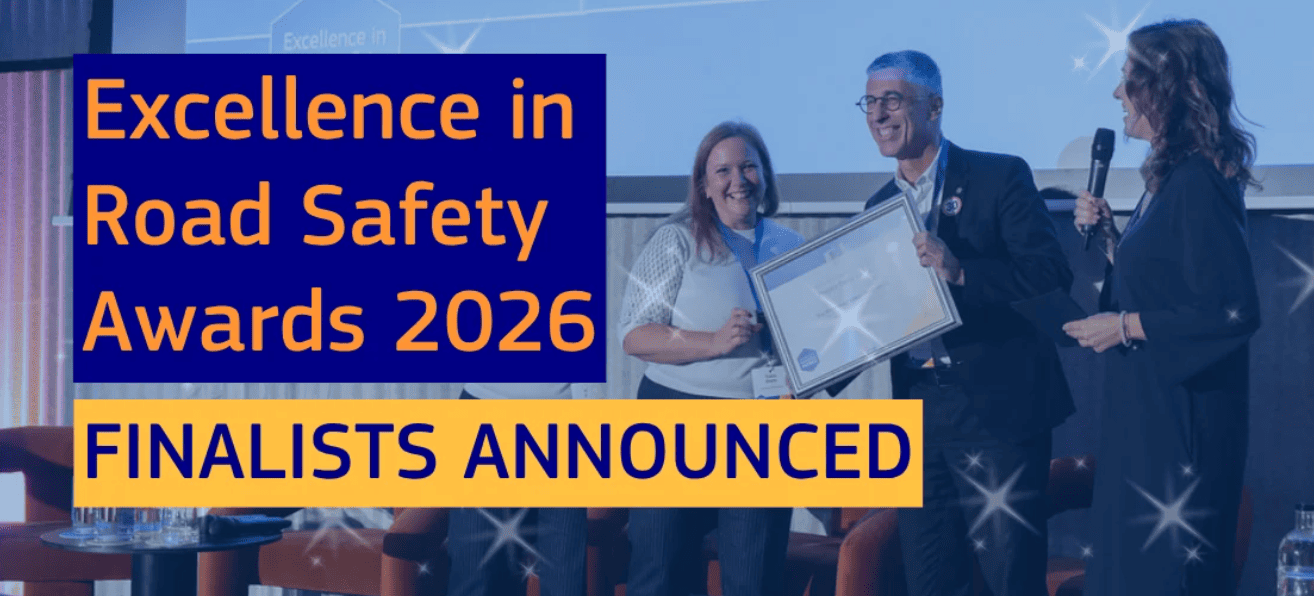
The European Federation of Driving School Associations (EFA) is proud to announce that its associate member Mettis AI has been selected as a finalist for the Excellence in Road Safety Awards 2026 (European Road Safety Charter).
The recognition follows a thorough review process: the judging panel assessed all submissions from organisations and individuals working to improve road safety across Europe, and has now identified the finalists across the five award categories — At Work, Education, Technology, Urban and Vulnerable Road Users.
The winners will be announced at the Road Safety Conference, taking place on 23 November 2026 in Brussels and online.
EFA congratulates Mettis AI and all the other finalists on this achievement, and encourages members to follow the conference to discover the winners.
European Mobility Week, the European Commission’s flagship awareness-raising campaign on sustainable urban mobility, returns from 16 to 22 September 2026. Each year the campaign brings together local authorities, organisations, stakeholders and citizens across Europe to encourage cleaner, safer and more inclusive transport choices.
Through awareness activities, community events, mobility actions and policy initiatives, participants are encouraged to explore how collaboration across generations can help make transport safer, more inclusive and more sustainable. The theme aligns closely with broader European efforts to promote fairness across generations and strengthen long-term thinking in mobility planning and governance.
The campaign is relevant to road safety professionals, public authorities, mobility practitioners, NGOs, educators, researchers and citizens interested in creating safer and more accessible transport systems for all.
New motorcycle registrations in five of the largest European markets (i.e. France, Germany, Italy, Spain and the UK) reached 636.490 units during the first six months of 2026. This represents an increase of approximately 16,8 % compared to 2025 (545.127 units).
Motorcycle registration volumes increased in Germany (114.849 units, 27,6 %), in Spain (141.101 units, 23,6 % year-on-year), UK (54.962 units, 15,8 %), in Italy (220.776 units, 13,2 %) and in France (104.802 units, 6,4 %).
During this same period, moped registrations reached a total volume of 72.076 units in the six European moped markets monitored by ACEM (i.e. Belgium, France, Germany, Italy, the Netherlands and Spain). This registration volume represents an increase of 4,7 % in comparison to last year (68.814 units). Moped volumes increased in Italy (7.819 units, 18,2 %), in Germany (8.658 units, 9,3 %), in Spain (6.274, 9,1 %), in Belgium (14.475 units, 8,8 %), in France (22.365 units, 3,5 %) and decreased in the Netherlands (12.485 units, -5,4 %).

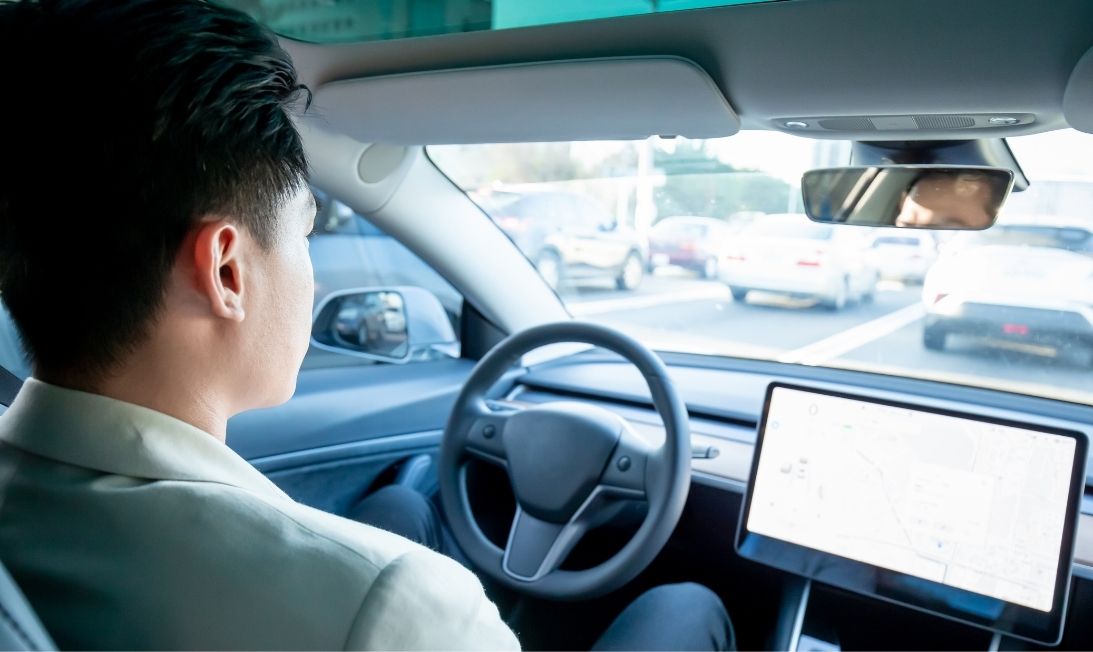
Taking back control of an automated vehicle isn’t just a technological challenge — it’s fundamentally a training issue. Driving schools will play an increasingly central role in preparing drivers to safely handle these human-machine transitions, which demand attention and quick response.
This is the territory explored in Marios Sekadakis’s PhD thesis, “Safety assessment and behavioural modelling of take-over dynamics in automated driving: from human response to network-level simulation,” supervised by Prof. George Yannis (NTUA).
The study developed an integrated framework explaining how take-over response and safety at SAE Levels 2 and 3 are shaped by transition context, driver state, interface design and vehicle dynamics, combining meta-analysis, simulator experiments, data-driven modelling and network-level traffic simulation.
A key finding: safety cannot be explained by take-over duration alone, but emerges from the interaction between HMI design, automation level, behavioural variability and road context.
The results provide a valuable evidence base not only for designing safer automated driving systems, but also for shaping targeted training programmes, better equipping drivers for the automated vehicles of the future.
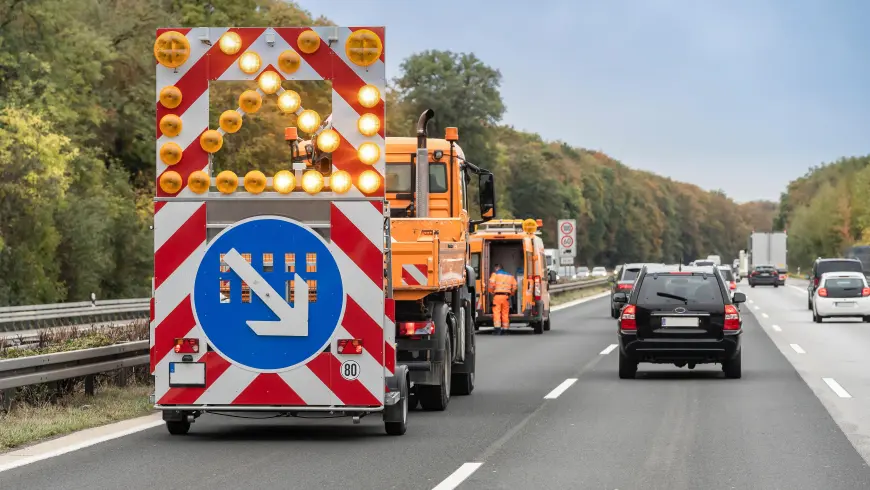
The Road Safety Report 2026 highlights a frequently overlooked issue: the road as a workplace. This affects a wide range of people, from transport and delivery workers to road construction crews, waste management staff, winter maintenance teams, and emergency responders. In many countries, road crashes are among the leading causes of fatal workplace accidents, and uninvolved third parties are often affected too.
What makes the road a uniquely challenging workplace is its unpredictability: weather, traffic, technical faults, and other drivers’ behavior can create critical situations at any moment. Add time pressure, irregular shifts, monotonous driving, and insufficient rest, and fatigue becomes one of the most significant risk factors, sharply impairing reaction time and attention.
Human factors aren’t the only ones at play: vehicle condition, road surface quality, and traffic design all directly affect crash risk. Driver-assistance systems can improve safety, but only when used correctly and functioning reliably.
The EU Road Safety Conference will take place on 23 November 2026 at the Charlemagne Building in Brussels (Belgium), bringing together policymakers, researchers, employers, industry representatives, and civil society organisations to discuss the future of road safety in Europe.
Organised by the European Commission, the conference marks the midway point of the EU Road Safety Policy Framework 2021–2030, providing an opportunity to review progress towards the European objective of halving road deaths and serious injuries by 2030 and advancing the long-term Vision Zero ambition.
The conference programme will address some of the most pressing challenges facing road safety today, including the use of health data to support evidence-based policymaking, the deployment of connected and automated vehicles, and the growing role of data-driven approaches in improving road safety performance across Europe.
51st Road Conference, Meeting of Scientists, Experts and Entities in charge of Planning, Designing, Construction and Maintenance of Roads and Traffic Infrastructure in order to Increase Traffic Safety and Management of Traffic Infrastructure more rationally.
It is thematically related to strategic planning, construction and maintenance of road network development, traffic safety, development and implementation of IT systems in the function of traffic management, innovations in the field of traffic signaling and equipment, new technologies in road construction and maintenance, plans of sustainable urban mobility and environmental protection, possibilities of using funds, and smart infrastructure management in cities – “Smart city”.
In accordance with EU road policy and global trends, the Conference conceptually connects all modes of traffic that enable the sustainable development of the transport system with energy efficiency and environmental care while maximizing the safety of all road users.