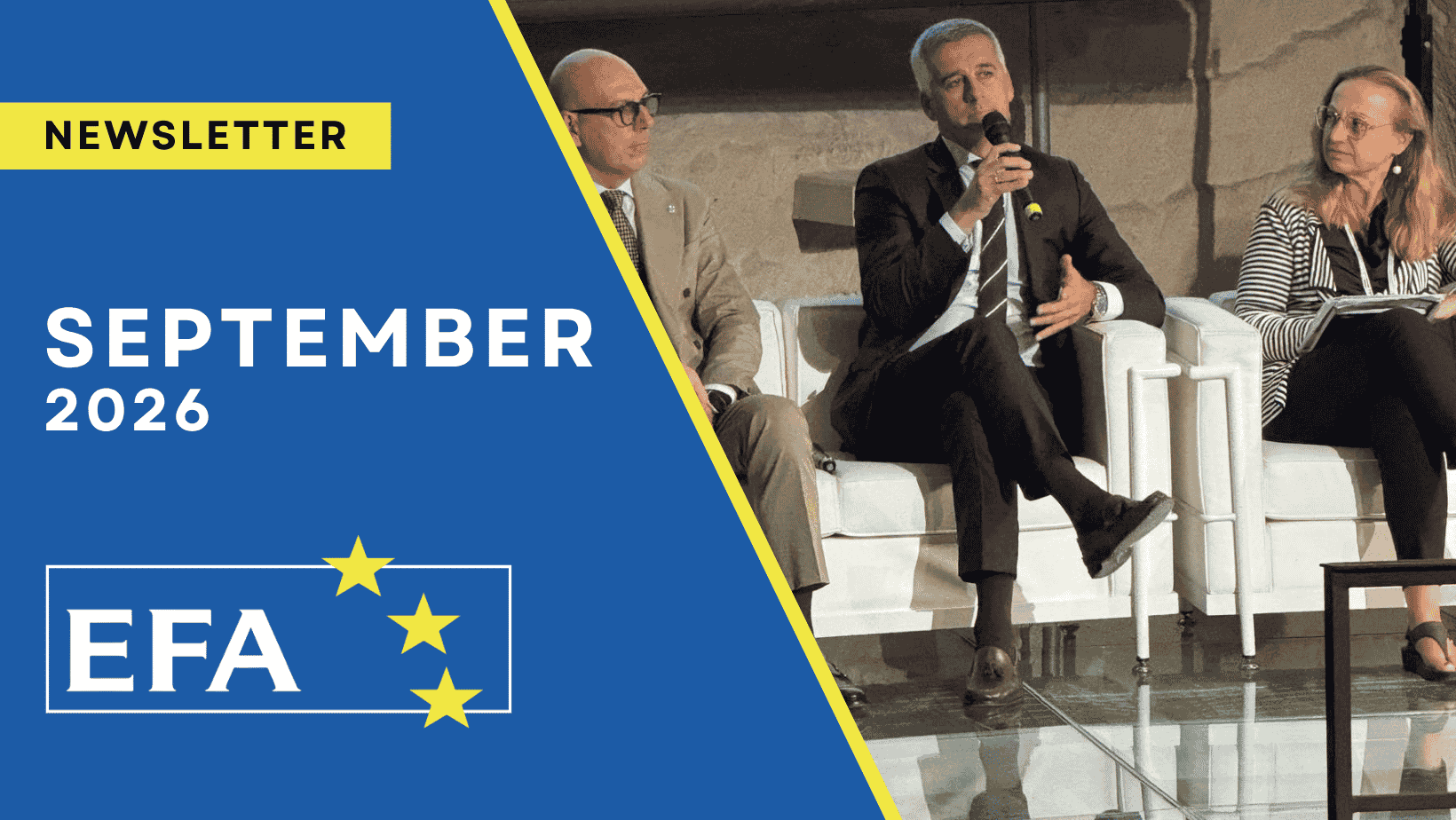


On June 18, 2026, the Gabriele Borgogni Association, UNASCA, ERSC, and EFA brought together representatives of driving schools, policymakers, researchers, and civil society organizations in Florence for a day of discussion on the new EU Driving Licence Directive and its implications for road safety across Europe.
The event, held under the title “The New Driving Licence Directive: How Civil Society is Shaping the Future of Road Safety in the EU,” was structured around three core themes — training, disability, and vulnerable road users — reflecting the areas where EFA has been most active in recent years at both national and European level.
The morning session on training featured contributions on CPR in driving schools, hazard perception, neuroscience-based approaches to safe driving, and periodic training for licence holders. The disability session that followed brought together experts from Germany, France, and Italy to share best practices on training instructors, using simulators for people with reduced mobility, and supporting deaf learners. The afternoon closed with a session on vulnerable road users, including perspectives from Belgium, Spain, and grassroots Italian initiatives involving young people.
Manuel Picardi, EFA General Secretary, expressed satisfaction with the outcome: “We are very pleased with how the event went. We brought together several European countries — France, Spain, Germany and Belgium — to share how their training systems have helped shape the new Driving Licence Directive, and to illustrate how we hope these models can be introduced in Italy in the coming years. We structured the day around three specific themes: training, disability, and vulnerable road users. These are the areas where EFA has been working with the greatest determination in recent years, and where it has achieved significant results at international and institutional level.”
The presence of MEPs Carlo Fidanza and Francesco Torselli, alongside a video message from Claire Depré, Head of Unit at DG Move of the European Commission, underlined the political relevance of the debate and the growing recognition of civil society’s role in shaping EU road safety policy.
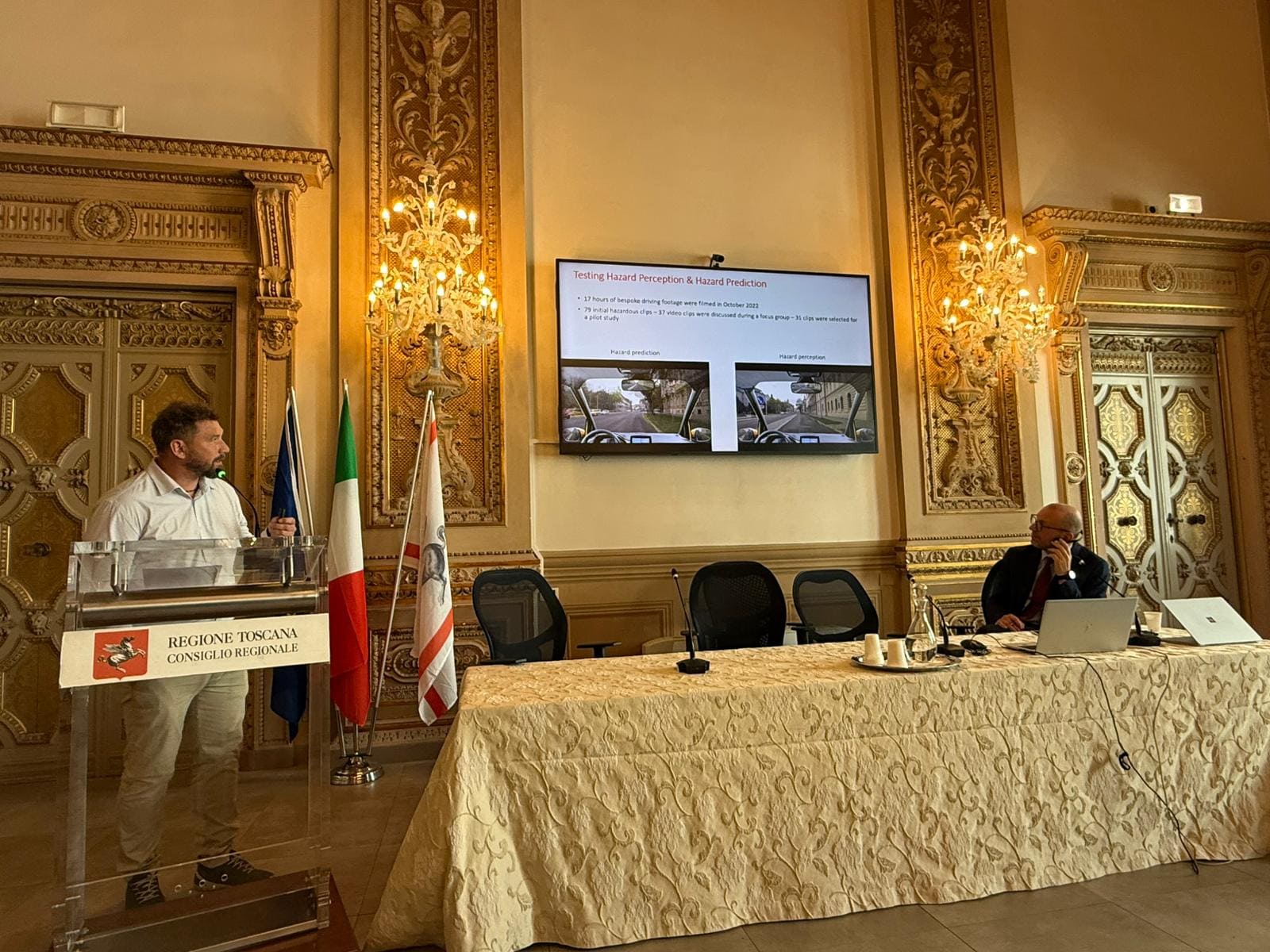
Jiri Novotny

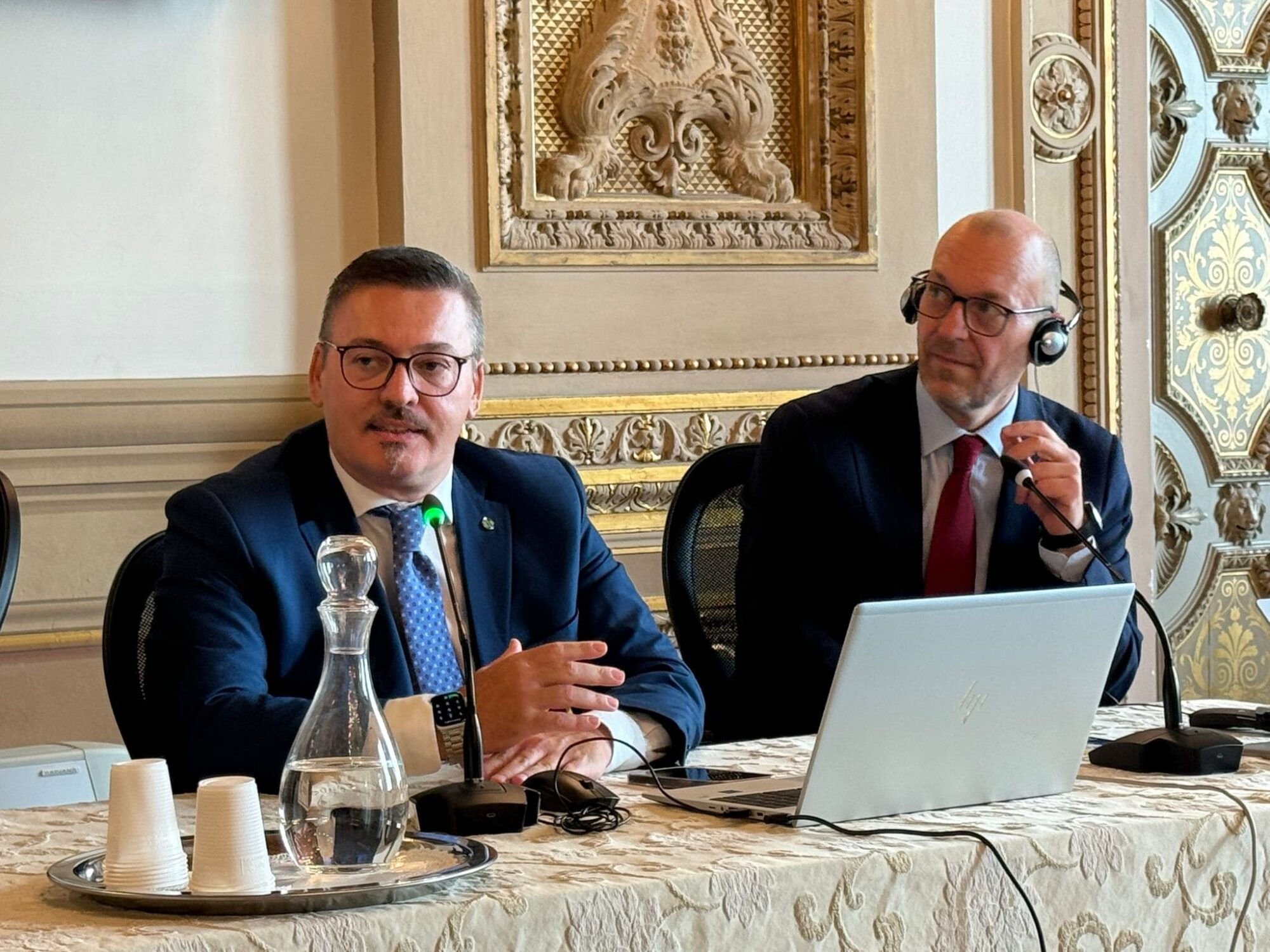
Alfredo Boenzi and Manuel Picardi
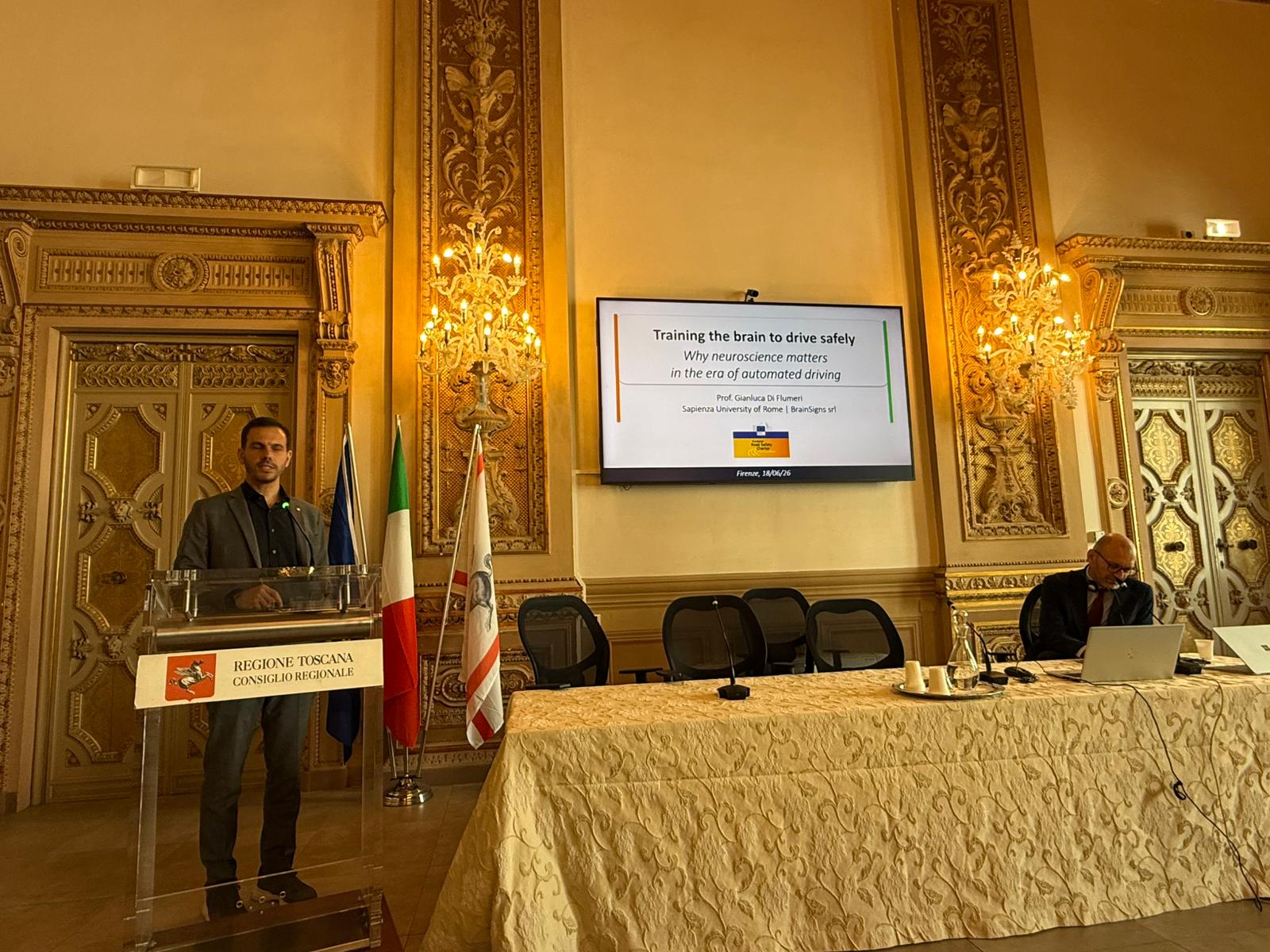
Prof.Gianluca Di Flumeri
On 25th June, the European Parliament hosted “EP Resuscitates: Learn CPR, Save Lives” — a full-day workshop that brought trained CPR instructors directly to the heart of European policymaking.
The event marked a significant step in EFA’s ongoing commitment to integrating emergency life-saving skills into everyday European life. Members of the European Parliament and members of the general public took part in hands-on CPR training, while dedicated sessions explored the policy landscape for embedding resuscitation training in schools, workplaces, and driving school curricula.
The day built on the findings presented at our earlier roundtable, “Equipping Drivers for Emergencies – CPR in the Driving License Directive,” the report from which has now been shared with participants. That report distils the key takeaways from expert presentations and the substantive discussion that followed, offering a practical foundation for national-level advocacy. We encourage all stakeholders to bring these findings to decision-makers in their countries, championing the inclusion of CPR training as a standard component of driver education across the EU.
The enthusiasm and engagement shown by parliamentarians and members of the public alike on 25 June sent a clear message: when given the tools and the opportunity, people want to learn how to save a life. Our task now is to translate that momentum into lasting policy change — ensuring that the next generation of drivers is also the next generation of first responders.
We extend our sincere thanks to everyone who contributed to both events, and we look forward to continuing this work together.
Download the report “Equipping Drivers for Emergencies – CPR in the Driving License Directive” and update you on our upcoming CPR awareness-raising initiatives.
A recently published study in Transportation Research Part F: Traffic Psychology and Behaviour provides new evidence on how traffic psychology can support learner drivers facing one of the most stressful moments of their training: the practical driving test.
The research evaluated a brief psychological training programme specifically designed for candidates experiencing high levels of driving test anxiety. The results showed that participants who received the intervention from a traffic psychologist reported significantly lower anxiety levels before the practical test compared to a control group receiving additional support from a driving instructor. While the programme was not intended to improve pass rates directly, it helped candidates better manage the emotional demands associated with the examination.
What makes this publication particularly meaningful is its origin.
The project began in 2015 as an idea developed during a Master’s degree course in Traffic Psychology at the Catholic University of the Sacred Heart in Milan. It was later expanded through a student thesis and progressively developed into a structured research programme. More than ten years later, that initial idea has become a peer-reviewed scientific publication.
The study also highlights the importance of collaboration between universities and driving schools. The first data collection was carried out at Autoscuola Centauro, whose willingness to support research made this work possible. Over the years, several other driving schools also contributed to the project, demonstrating how practitioner involvement is essential for advancing knowledge in driver education.
For EFA members, the message is clear: if Traffic Psychology is to contribute meaningfully to road safety, it must be supported by scientific evidence. Driving schools are not only places where people learn to drive; they can also become laboratories for innovation, helping researchers understand how to improve learning, safety, and driver wellbeing.
The paper is available free of charge for 50 days from 23 June 2026 through Elsevier’s Share Link.

In early June, Truck Park Brescia Est — one of the largest and most advanced secure parking facilities in Europe — hosted three days of activities dedicated to the health and wellbeing of professional drivers, as part of the European Wellbeing Initiative known as Ewellin.
The event, held from 5 to 7 June and organised by ESPORG with the support of the European Commission and over 150 stakeholders, brought together drivers, fleet managers, parking operators, and transport professionals for practical sessions on physical and mental wellbeing, fatigue prevention, and personal resilience. The venue itself — a EU Gold-certified facility operated by A4 Holding / A4 Trading — embodied the spirit of the initiative, offering drivers a genuine “home away from home” along the A4 motorway.
EFA was speaker as a partner in this initiative, reflecting a growing collaboration with ESPORG aimed at developing a dedicated wellbeing module for professional drivers within the CPC (Certificate of Professional Competence) training framework — the mandatory continuing education programme required by European institutions for all professional drivers. The goal is to ensure that driver health and wellbeing are not treated as an afterthought, but become a structured and recognised part of professional training across the EU.
The Brescia event offered a concrete demonstration of what that commitment looks like in practice: open conversations, peer-to-peer exchanges, and a focus on the small, everyday changes that can make life on the road healthier and safer. The guiding spirit of the Ewellin initiative — Drive Safe, Park Safe, Work Safe, Live Well — captures precisely the vision that EFA and ESPORG are working to embed into European training standards.

Dirk Penasse and the interpreter
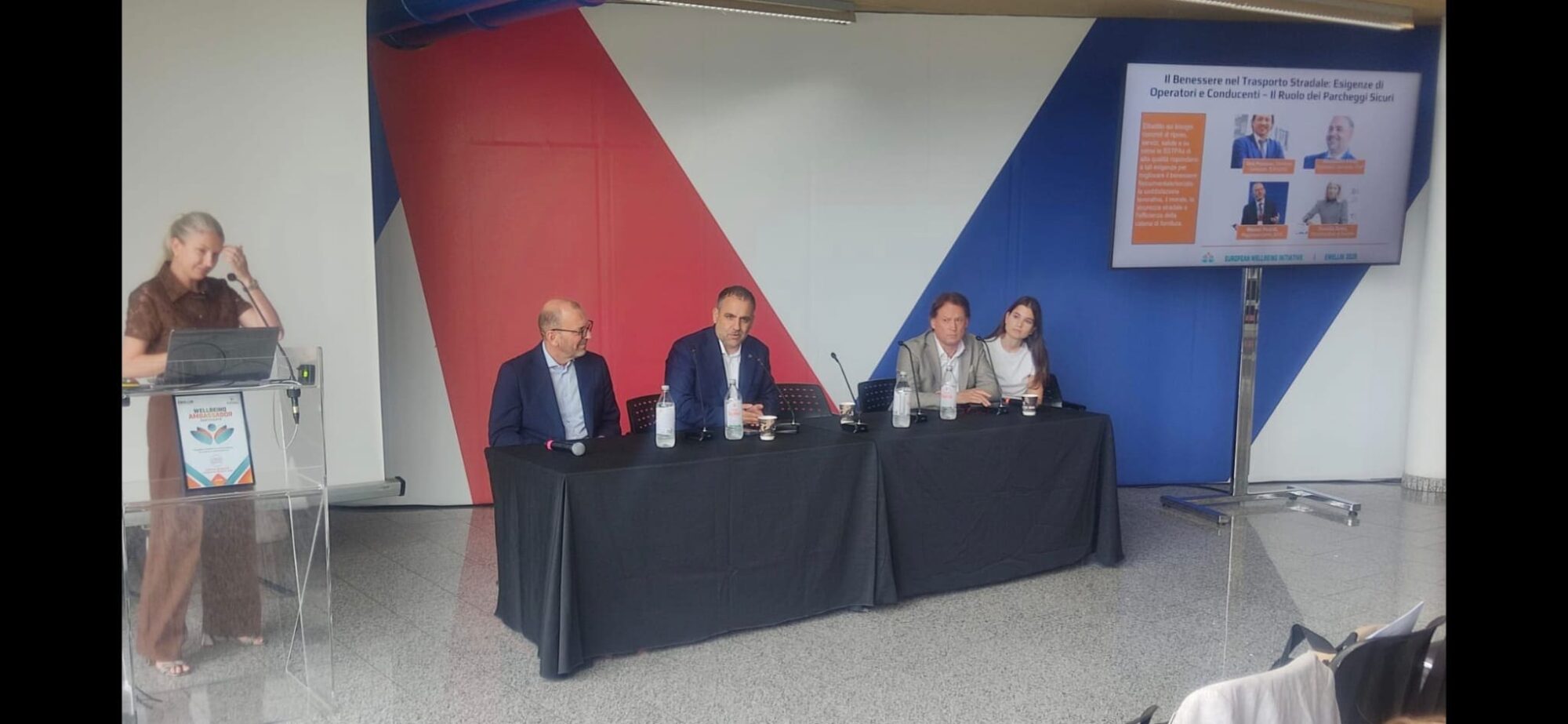
Druselia Betea, Manuel Picardi, Alessandro Peron, Dirk Penasse and the interpreter
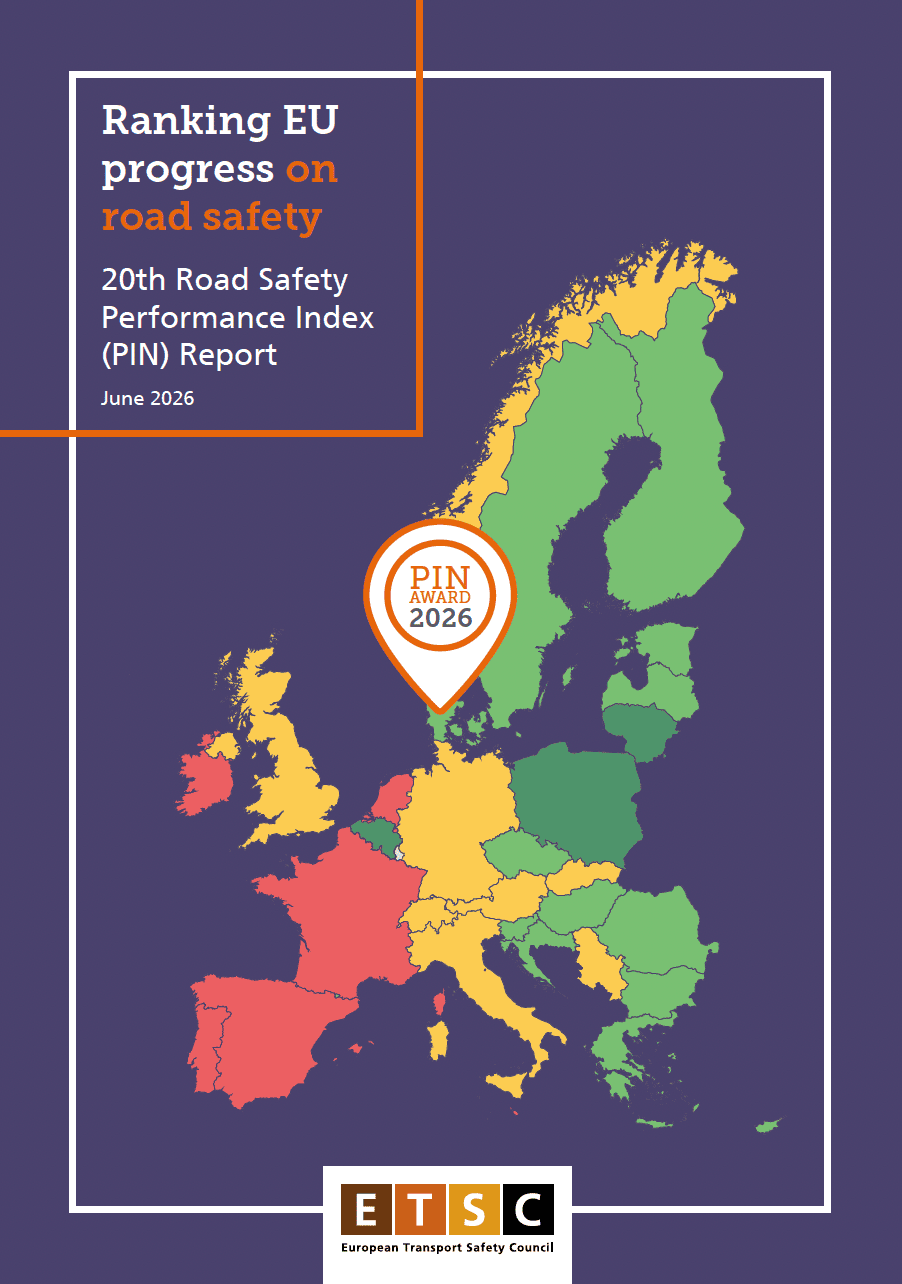
The 20th edition of ETSC’s Road Safety Performance Index (PIN), published on 23 June, sends a clear warning signal: the EU is off track to meet its target of halving road deaths by 2030. In 2025, around 19,500 people were killed on European roads, with deaths falling by just 2% compared to the previous year. To stay on course, annual reductions of around 10% would be needed — five times the current rate of progress.
For driving schools and driver training professionals, these figures carry a specific message: the quality of driver education remains one of the most effective tools available to reverse the trend. It is not simply about passing a test — it is about building safe, lasting behaviours behind the wheel.
The report also shows that progress is possible when the right commitments are made. Poland has cut road deaths by 43% since 2019, driven in part by significant investment in road safety education and enforcement.
ETSC calls on the EU and national governments to fully embrace the Safe System approach, strengthen enforcement, and resist pressure to weaken vehicle safety standards. For driving schools and their national federations, this is also a call to engage with policymakers and make the case that driver training is a cornerstone of road safety policy — not a bureaucratic formality.
The full PIN 20 report is available at www.etsc.eu/pin20
The European Parliament has published a STOA study titled “Expected Impact of the Deployment of Automated Vehicles in the EU”, examining how automated mobility could reshape Europe’s transport systems, industry and regulatory framework.
The study offers a particularly relevant perspective for the CCAM community. It highlights that Europe already benefits from strong foundations in safety, regulation and system integration, while underlining that future leadership will depend on the ability to move from research and pilot projects to coordinated, large-scale deployment across Member States.
Importantly, it confirms that automated mobility is driven not only by vehicle technologies, but by a broader system integrating Artificial Intelligence, Software-Defined Vehicles and Intelligent Infrastructure — an approach fully aligned with the CCAM vision.
The findings support key CCAM priorities: accelerating deployment through cross-border testbeds and regulatory sandboxes, strengthening alignment between national frameworks, and focusing on use cases with clear societal value such as public transport, logistics and accessibility. A timely signal as discussions on the next Automotive Partnership progress.

The safety of e-scooters and electric bikes has landed on the European Parliament’s agenda. Irish MEP Cynthia Ní Mhurchú (Renew) has submitted a written question to the Commission calling for a mandatory online safety assessment — an “e-permit” — for all users of these vehicles.
The concern is straightforward: today, anyone as young as 16 can ride an e-scooter on public roads with no formal knowledge of traffic rules, despite these vehicles having acceleration capabilities comparable to licensed motor vehicles.
The Commission’s response, delivered by Commissioner Tzitzikostas, is measured. The new EU Driving Licence Directive (DLD 2025/2205) does not introduce any dedicated permit system for micro-mobility users, but does strengthen training requirements for car drivers to improve coexistence with vulnerable road users. For now, no changes to licensing rules for e-scooters and e-bikes are planned at EU level — with one exception: vehicles capable of exceeding 25 km/h already require an AM licence.